A seed oil-free kitchen cooks without industrial seed oils: the canola, soybean, corn, sunflower, safflower, and grapeseed oils, and the blended “vegetable oil” that most restaurants fry and sauté in. It is harder and more expensive to run a kitchen that way, which is most of the reason so few do.
Key points
Many diners avoid seed oils for health reasons.
Seed oil-free kitchens swap in olive oil, butter, and animal fats. These cost more and carry real flavor.
The real test isn’t just the fryer. It’s the dressings, bread, and bought-in stocks, where seed oil slips back in.
Tarbell’s on Camelback Road in Phoenix is one of the ones that does. Here is what that actually means, why a kitchen would make the call, and, if you are trying to eat this way in the Valley, what to look for and where to start.
See how a kitchen cooks without seed oils: view the menu, or reserve a table and taste it for yourself.
What are seed oils?
Seed oils are cooking oils extracted from the seeds of plants rather than from fruit. The common ones are canola (rapeseed), soybean, corn, cottonseed, sunflower, safflower, grapeseed, and rice bran. Most of what a supermarket or a restaurant supplier labels simply “vegetable oil” is one of these, or a blend.
They became the default for sound practical reasons: they are cheap, nearly flavorless, and stable at high heat, which makes them ideal for frying and for holding large volumes of prepared food. A restaurant that fries anything is almost certainly frying in them, often in the same oil for days.
Why would a kitchen stop using them?
Two very different arguments get made here, and they are worth separating.
The first is about health. Seed oils are high in omega-6 linoleic acid, and a popular argument holds that modern diets carry too much of it relative to omega-3, and that the refining process is itself a problem. This is genuinely contested. Major nutrition bodies still consider these oils acceptable, and much of the research on replacing saturated fat with polyunsaturated fat has been favorable. Anyone claiming the science is settled, in either direction, is overselling it. If you are making decisions about your own health, that is a conversation for your doctor, not a restaurant’s blog.
The second argument is about cooking, and it is far less contested. Seed oils are engineered to be neutral. Neutrality is exactly what you want when you are frying in volume and need the oil to stay out of the way. It is exactly what you do not want when the fat is meant to be part of the dish. Butter browns. Good olive oil carries pepper, grass, and a little bitterness. Animal fats carry the flavor of what they came from. A kitchen that cooks in fats with character is making a flavor decision before it makes anything else, and that costs money. Fats with character run several times the price of commodity oil, behave differently under heat, and will not sit patiently in a fryer. Giving up seed oils means giving up a great deal of convenience, which is the honest reason the practice stays rare.
What “seed oil-free” should mean on a menu
The phrase is unregulated, so it helps to know what a serious version of it involves. The oil in the pan is the easy part. The harder part is everything that arrives already made. Four questions separate a real commitment from a decorative one:
The fryer. Anything crisp came out of fat. If a kitchen fries, what is in the fryer is the single biggest question.
The dressings and sauces. Commercial mayonnaise, aioli, and vinaigrette are built on seed oil almost without exception. A kitchen making its own is making a real commitment.
The bread and pastry. Most commercial bread, and nearly all commercial pastry, carries seed oil or shortening.
The bought-in components. Stocks, marinades, and cured items are where seed oil slips quietly back in.
A kitchen that has thought this through can answer all four without hesitating. One that cannot is using the phrase as decoration.
The surest test is the one on the plate, not the one on the page. See the current menu.
Who’s making this call
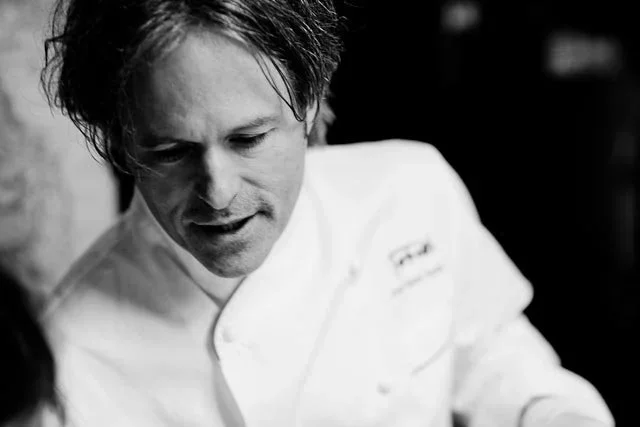
Chef Mark Tarbell opened Tarbell’s on Camelback Road in 1994 and has cooked on this block ever since. He was handed Jacques Pépin’s La Technique at fourteen, apprenticed at the Sonesta Hotel in Amsterdam at eighteen, studied at École de Cuisine La Varenne in Paris, where he earned a Grande Diplôme d’Étude Culinaire, took a diploma from Steven Spurrier’s l’Académie du Vin, and has worked in Michelin-starred kitchens abroad and at home. The restaurant has collected more than fifty city “Best Of” and industry awards, including a Food & Wine Best Restaurant. Mark is a James Beard “Best Chef, Southwest” nominee who has cooked eleven dinners at the James Beard House, won Food Network’s Iron Chef America, and holds four Emmy Awards as host of AZ PBS’s Plate & Pour and Check, Please! Arizona.
That background matters here for a specific reason. Classical French training teaches you to build flavor out of fat: butter, olive oil, the fat rendered from the thing you are cooking. A kitchen trained that way never really adopted neutral oil as a flavor tool in the first place. Taking seed oils out of a menu like this one is less a reinvention than a return.
How it reads on the plate
The effect shows up most clearly in the dishes where fat is doing visible work. The clearest case is a raw one. Tar’s Classic Beef Carpaccio is dressed in extra-virgin olive oil with micro-shaved Parmesan, arugula, and a Noble Bread spear. There is no heat and no sauce, so the oil is most of the flavor, and there is nowhere for a cheap one to hide. We wrote more about those raw plates here.
The harder test is the fried side of the menu, because frying is where the shortcut normally happens, and it is the first place to look when a kitchen claims to cook clean. It is the same thinking that runs through how the restaurant buys in general, which we covered in how we source: make rather than assemble, and spend where it shows on the plate. For what is fried, dressed, and in season right now, the current menu is the truest source.
Raw plates have nowhere to hide, which makes them the most honest test of a kitchen. Come run it yourself. Reserve a table.
Eating seed oil-free in the Valley
If you are looking for this in Phoenix or Scottsdale, the honest picture is that dedicated seed oil-free restaurants are still rare here. A few habits serve you better than hunting for the label:
Favor kitchens that make their own dressings and bake their own bread, the two hardest components to source clean.
Lean toward grilled, roasted, and raw preparations when you cannot confirm the fryer.
Ask directly. The answer comes quickly from a kitchen that made the decision, and slowly from one that did not.
Check whether the claim covers the whole menu or just one corner of it.
Tarbell’s sits about ten minutes from Old Town Scottsdale, which puts it comfortably in range from either side of the Valley.
Come see what cooking without seed oils tastes like: view the menu, or reserve a table.
Frequently Asked Questions
-
Cooking oils pressed or extracted from plant seeds, including canola, soybean, corn, cottonseed, sunflower, safflower, and grapeseed. Most generic “vegetable oil” is one of these. -
The evidence is genuinely mixed and the debate is unsettled. Major nutrition bodies still consider them acceptable, while critics point to omega-6 content and refining. For personal health decisions, talk to your doctor.
-
Typically olive oil, butter, and animal fats, all of which cost more and behave differently at high heat, which is why the practice is uncommon.
-
Yes, mainly because of fryers, commercial dressings, and bought-in components. Grilled, roasted, and raw dishes are safer bets, and it is always worth asking.
-
Tarbell’s on Camelback Road in Phoenix, a short drive from Scottsdale. Check the current menu for what is offered.