Beef Carpaccio and Hamachi Crudo: A Chef’s Guide to Raw Small Plates
Beef carpaccio is raw beef, sliced paper-thin and dressed simply. Hamachi crudo is raw hamachi — yellowtail — brightened with citrus and oil. Both are among the most elegant ways to open a meal, and both depend almost entirely on the kitchen behind them.
What follows is a short guide to each dish: what it is, how to recognize a careful version, whether raw is safe, what to pour alongside, and where to find both done properly in Phoenix — both are on our share-plates menu right now.
What is Beef Carpaccio?
Carpaccio is raw beef, pounded or sliced wafer-thin, and finished with a few bright accents: good olive oil, a little acid, a whisper of cheese, a handful of greens. Nothing is cooked. The point is the clean flavor of excellent beef, with just enough dressing to lift it.
The dish is younger than most people assume. It was created at Harry’s Bar in Venice in the 1950s by Giuseppe Cipriani, reportedly for a countess who had been advised to avoid cooked meat, and named for the Venetian painter Vittore Carpaccio, whose work favored vivid reds and whites. The olive oil, arugula, and Parmesan version served almost everywhere today came later.
Beef tenderloin is the usual cut—lean, fine-grained, and tender enough to eat raw. The kitchen either pounds it thin between sheets or partially freezes it and slices it by machine. The goal is the same either way: thin enough to see light through, cold, and never torn.
What is Hamachi Crudo?
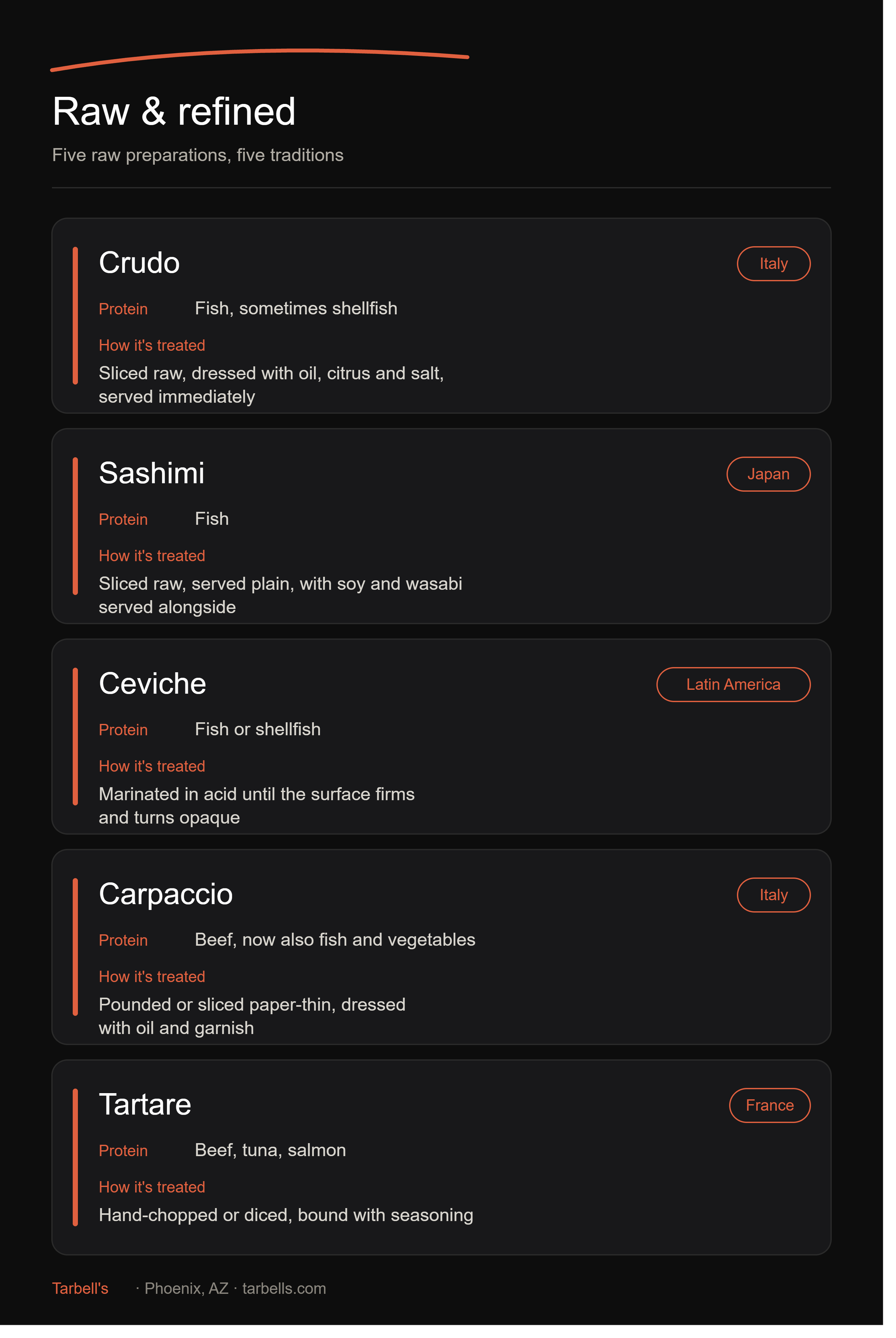
Crudo is Italian for raw. In practice it means thin slices of raw fish dressed with oil, citrus, and seasoning and served as a small plate. It is often confused with sashimi, which is Japanese and served plain with soy and wasabi, and with ceviche, which uses acid to firm and opacify the fish over time. Crudo sits between the two: raw like sashimi, dressed like an appetizer, and served the moment it is plated so the citrus brightens rather than cures.
Hamachi, or Japanese yellowtail, is the favorite for crudo — buttery without being heavy, clean on the finish, and mild enough to carry citrus, chili, and herbs without disappearing.
Crudo, sashimi, ceviche, and tartare at a glance
How to tell a good raw plate from a careless one
Look at the slice. Carpaccio should be even and translucent at the edges, with no tears or thick patches. Crudo should be cut cleanly across the grain, with each piece the same thickness.
Look at the color. Good raw beef is bright red to deep pink, never grey or dull at the edges. Hamachi should look glossy and translucent, not chalky or matte.
Taste the dressing balance. The garnish exists to frame the protein, not bury it. If all you taste is lemon, or salt, or cheese, the kitchen is hiding something.
Note the temperature. Both should arrive genuinely cold, on a cold plate.
Ask when it was cut. A kitchen that is proud of its raw program will tell you without hesitating.
Now you know what to look for.
Come inspect the carpaccio yourself
Is raw beef or fish safe?
Raw beef and fish always carry some risk, and the county requires restaurants to say so: consuming raw or undercooked meats, poultry, seafood, shellfish, or eggs may increase your risk of foodborne illness. What a good kitchen controls is how small that risk is.
Raw service depends on quality product and careful handling: proper cold-chain temperatures, spotless surfaces and separate boards, product bought specifically to be served raw, and short holding times between cutting and serving. Fish for raw service is typically frozen to specific parameters beforehand, a step that addresses parasites while leaving texture intact. Beef for carpaccio is whole-muscle and trimmed, which matters because the risk on beef sits on the exterior surface rather than through the middle, as it does with ground meat. It is the same standard of sourcing and handling write about across the whole kitchen.
If you are pregnant, immunocompromised, or otherwise advised to avoid raw animal protein, skip these plates and ask the kitchen for a cooked alternative.
Reserve a table and start with the share plates
What to pour beside them
Raw small plates favor bright, high-acid wines. A crisp white or a dry sparkling suits the crudo, cutting the fish’s richness and resetting the palate between bites. Carpaccio pairs well with something light and mineral — a high-acid white, or a very light red served slightly cool.
Ask what is open by the glass and we will point you to the right bottle, or take one home from The Wine Store.
On our menu in Phoenix
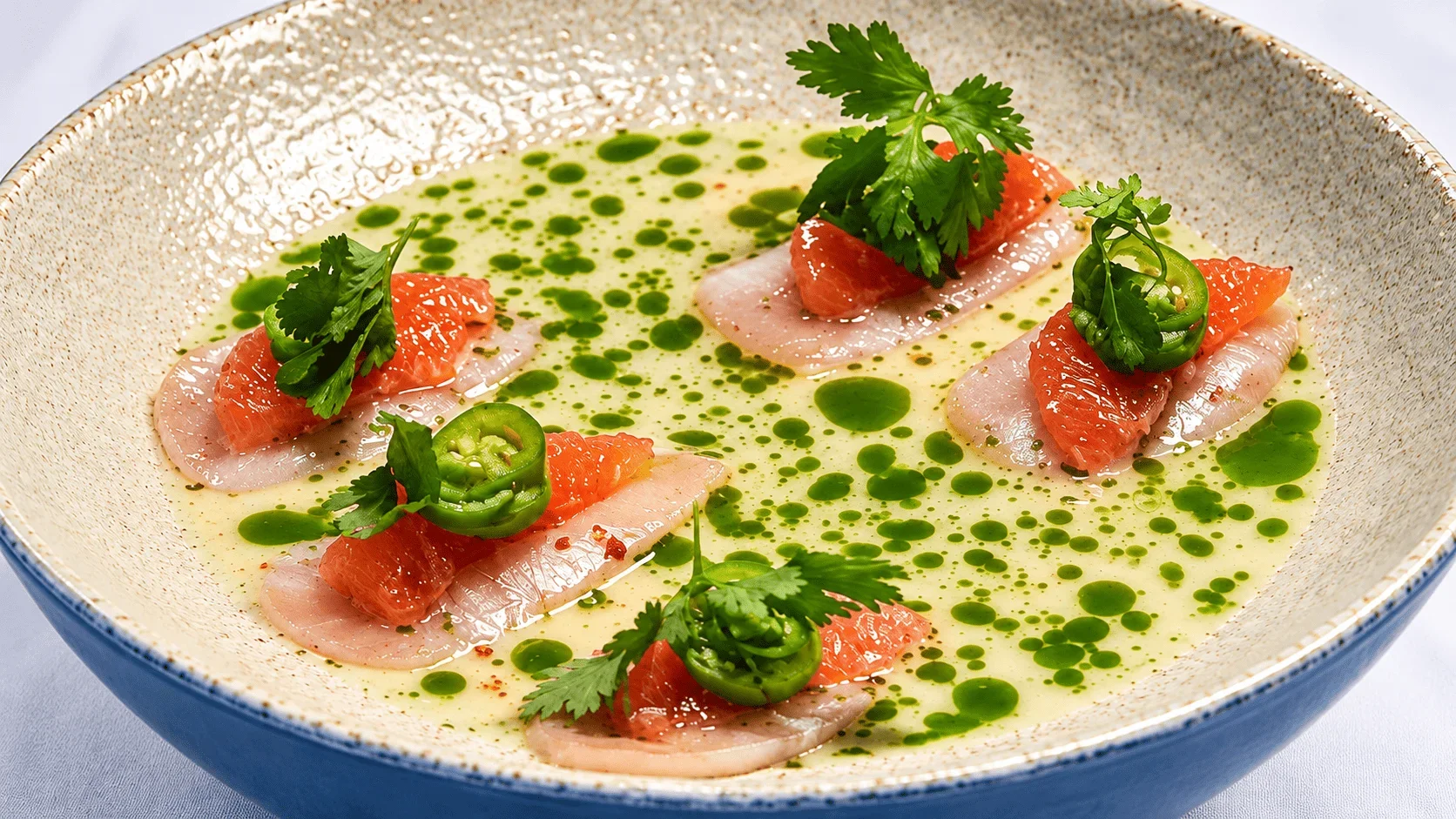
At Tarbell’s on Camelback Road, both are on the share-plates menu: Tar’s Classic Beef Carpaccio, with extra-virgin olive oil, micro-shaved Parmesan, arugula, and a Noble Bread spear; and the Hamachi Crudo, gluten-free, with chili-cucumber mignonette, Arizona-citrus-infused coconut milk, and onion ash.
That last element is the one worth pausing on. The onion ash is made overnight in the wood-fired oven as it cools after service, then infused into olive oil — a step the dish does not strictly require, built in because Chef Mark Tarbell wanted a specific flavor and was willing to use the oven’s cooling cycle to get it.
“Who doesn’t love hamachi? This is just the thinnest, beautiful hamachi, sushi grade. And there’s a lot of things happening here. We make an onion ash in our wood fired oven after it cools down at night. And then we make olive oil infused onion ash oil.”
— Chef Mark Tarbell
Chef Mark has cooked on this block since 1994. His training at École de Cuisine La Varenne in Paris and his time in Michelin-starred kitchens show most clearly in dishes like these, where technique is nearly the only thing on the plate.
Both are on the share-plates menu on Camelback Road, ten minutes from Old Town Scottsdale—and they share the table well with Mark’s Famous Meatball once the raw plates are done.
Frequently Asked Questions
What is beef carpaccio?
Raw beef sliced paper-thin and dressed simply, typically with olive oil, cheese, greens, and a little acid.
What is the difference between crudo, sashimi, and ceviche?
Sashimi is plain raw fish served with soy and wasabi. Ceviche is firmed in acid. Crudo is raw fish dressed with oil and citrus and served immediately.
What cut of beef is used for carpaccio?
Tenderloin is the standard because it is lean and fine-grained enough to eat raw without chewing.
What is onion ash?
Onion slowly dehydrated and charred, then ground to a fine powder. At Tarbell’s it is made overnight in the cooling wood-fired oven and infused into olive oil.
Is it safe to eat raw beef or fish?
Yes, when the sourcing and handling are right, which is why these dishes reflect the quality of the kitchen serving them.