
Sustainable Dining in Phoenix: How We Source
Sustainable dining is easy to claim and hard to verify. Most restaurants will tell you they use fresh, local ingredients. Few will tell you from whom, for how long, or what becomes of the waste.
Here is the specific answer for Tarbell’s on Camelback Road in Phoenix—the fish, the mushrooms, the tomatoes, the things made in-house, and where it all goes once dinner is over. Much of it changes week to week, so the current menu is always the truest version.
The fish, in a desert city
Phoenix sits about three hundred miles from the nearest ocean, which makes seafood the hardest part of sustainable dining to get right in the Valley. The answer comes down to how often you buy and how quickly you cook.
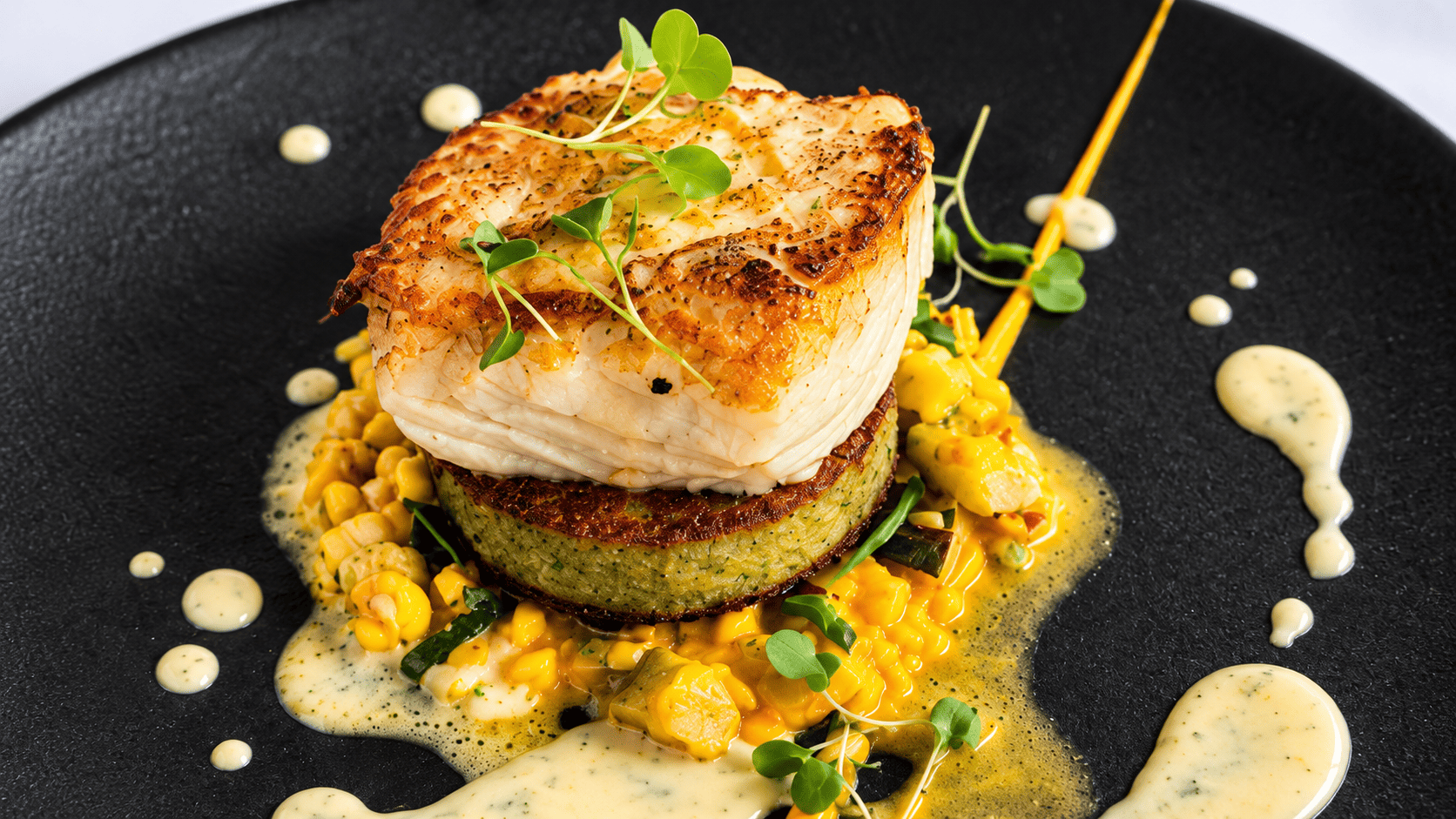
Chef Mark Tarbell grew up in Portsmouth, New Hampshire, a working fishing town, and the standard he holds fish to is a practical one: buy it the morning it is served, cook it hard and fast, and leave it alone. The sea bass goes into a hot cast pan with olive oil and then a very hot oven for a few minutes—a crisp exterior, barely set within.
The menu follows the buying rather than the reverse. Mr. Fish of the Moment changes with whatever is genuinely good that day; the mussels come from Blue Hill Bay in Maine. A dish built on what arrived that morning cannot be printed once and forgotten, which is why what’s on today is the only accurate source.
What local sourcing really means in Arizona
Local sourcing in the Sonoran Desert is a real constraint rather than a slogan. The growing calendar here runs opposite to much of the country, and much of what is abundant in January is gone by July. Sustainable dining in this state means working with that calendar instead of pretending it does not exist.
So the kitchen buys locally where Arizona genuinely delivers. The beet risotto carries lobster mushrooms from the high country around Flagstaff, in season for only a short window each year. The basil crema is made with basil from Chef Mark’s garden and ricotta made in house. The Arizona citrus in the Hamachi Crudo follows the same logic—citrus is something the state does exceptionally well, and it appears on the menu where it belongs rather than everywhere at once.
The long relationships
The most telling thing about how a kitchen buys is not what it sources, but how long it has sourced it from the same people. The clearest example at Tarbell’s is the marinara on Mark’s Famous Meatball and the growers behind its tomatoes.
“This marinara, we make it from those tomatoes you saw earlier. Same guys. Been getting our tomatoes for 27 years, and they’re just ground up with a little bit of garlic, a little bit of red wine, a little bit of Chianti. Super simple. All vegetarian.”
— Chef Mark Tarbell
More than two decades with the same growers is why that marinara tastes the same from one year to the next. Consistency over that span is a sourcing achievement rather than a recipe one.
What gets made in house
Sustainable dining is also a question of what a kitchen declines to buy ready-made. The ricotta in the basil crema is made on site. The onion ash in the Hamachi Crudo is made overnight in the residual heat of the wood-fired oven, then infused into olive oil. The tortillas for the Al Pastor tacos are pressed fresh. None of it is required, and all of it is slower and more expensive than the alternative.
What happens after dinner
Sourcing well and then discarding everything is only half a position. Since 2022, Tarbell’s has worked on the other half—the fuller picture lives on our mission page.
Glass. The restaurant has partnered with Glass King since 2022 to recycle all of its glass wine bottles, diverting more than four tons of glass from Arizona landfills each year. A public wine-bottle drop-off extends the program beyond what the restaurant uses itself.
Food waste. Food scraps have been composted with Recycled City since 2022, keeping organic material out of the landfill and returning it to Arizona soil.
Outside review. The restaurant works with students from Arizona State University’s Master of Sustainability Solutions program, which brings an outside eye to what could be done better.
The framework is simple—reduce, reuse, recycle, in that order. Four tons of glass a year, from one restaurant on one block, is a modest figure globally and a meaningful one locally. That is roughly the honest scale of what a single restaurant can do.
Why it shows up on the plate
Careful sourcing is not an abstraction; it is what allows a dish of four components to stand on its own. The raw share plates are the clearest case: with no heat and no sauce, the product is the dish, and a mediocre piece of hamachi has nowhere to hide. The same is true of the sea bass — olive oil, high heat, and a fish that arrived that morning. Short ingredient lists are only possible when the ingredients are right.
Come see what is in season, ten minutes from Old Town Scottsdale.
Frequently Asked Questions
What is sustainable dining?
Sourcing food responsibly and handling what is left over just as carefully. In practice it covers where ingredients come from, how long supplier relationships last, how much is made in house, and what happens to glass and food waste.
Where can I find sustainable dining in Phoenix?
Tarbell’s on Camelback Road recycles all glass wine bottles through Glass King, diverting over four tons from Arizona landfills annually, composts food waste with Recycled City, and works with ASU Master of Sustainability Solutions students.
Can I drop off my own wine bottles?
Yes. The glass recycling program includes a public wine bottle drop-off.
How fresh is the seafood in a landlocked city?
It is bought to arrive rather than to sit. Mr. Fish of the Moment changes with what comes in fresh, and the kitchen cooks fish hard and fast the day it arrives.
Does the menu change with the seasons?
Yes, because the sourcing does. Arizona’s growing calendar runs opposite to much of the country, and items like Flagstaff lobster mushrooms have short windows.
What does the kitchen make in-house?
Ricotta, onion ash and onion ash oil, tortillas, and the marinara, among others.